
Allegory of Wealth, Lust and Stupidity
late 16th century
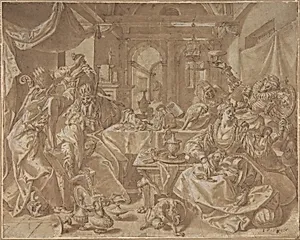
Medium
Pen and brush and brown ink, white body color
Dimensions
11-3/8 x 14-1/16 in. (28.9 x 35.7 cm)
Classification
Drawings
Department
Drawings and Prints
Museum
Metropolitan Museum of Art, New York, NY
Credit
Frits and Rita Markus Fund, 2000
Accession Number
2000.119
Rights
Public Domain
Tags
Art Historical Context
In the late 16th century, artist Joos van Wing crafted *Allegory of Wealth, and Stupidity*, a captivating drawing that embodies the moralistic allegories popular in Northern European art during the Renaissance. Working primarily in the Mannerist style, van Winghe, who later settled in Frankfurt, drew inspiration from Italian masters while infusing his works with witty, satirical commentary on human vices. This sheet, executed in pen and brush with brown ink white body color, measures 11-3/8 x 14-1/16 inches and likely served as an independent study or collector's piece, highlighting the era's fascination with personified virtues and follies. The title reveals a trio of human failings—wealth, lust, and stupidity—depicted through figures of men and women, accompanied by birds that may symbolize folly or fleeting desires, common motifs in emblematic art. Van Winghe's fluid lines and strategic use of white heightening create dramatic contrasts and volume, techniques that brought drawings to life as finished artworks rather than mere sketches. Housed in the Metropolitan Museum of Art's Drawings and Prints department, acquired through the Frits and Rita Markus Fund in 2000, it reflects the period's cultural preoccupation with moral instruction amid religious and social upheavals in the Low Countries. This intimate work invites visitors to ponder timeless vices, showcasing van Winghe's skill in blending humor with profundity on paper.