
Ambtszetel en antieke urn
Medium
etching
Dimensions
389; 256; 390; 258
Rights
Public Domain
About this artwork
height 389 mm x width 256 mm x height 390 mm x width 258 mm
Art Historical Context
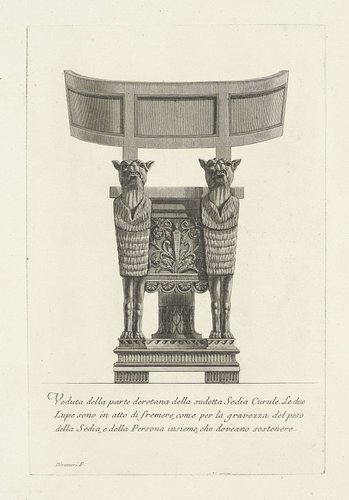
Giovanni Battista Piranesi's *Ambtszetel en ant urn* (Official Seat and Ancient Urn), an etching from 1778, captures the majestic remnants of classical antiquity with Piranesi's signature precision and drama. Created in the final year of the artist's life, this work belongs to his extensive series documenting Roman artifacts, such as vases, urns, and architectural fragments. Measuring approximately 389 mm high by 256 mm wide, it reflects the Venetian-born etcher's obsession with ancient Rome during the Enlightenment era, when Europe's elite embarked on Grand Tours to rediscover classical heritage. Piranesi, a master of the etching technique, employed intricate line work and deep tonal contrasts to imbue everyday antiquities—like the ornate official seat and urn—with a sense of timeless grandeur. His vedute style, blending meticulous archaeological accuracy with imaginative flair, influenced Neoclassicism and romanticized ruins as symbols of lost glory. This print not only served as a scholarly record but also fueled the 18th-century revival of classical motifs in art and design. Visitors will appreciate how Piranesi's work bridges history and fantasy, inviting us to ponder the enduring allure of Rome's shadowed relics. A testament to his prolific output of over 2,000 prints, it remains a captivating window into the cultural reverence for antiquity.
About the Artist
Giovanni Battista Piranesi · 1720–1778
Giovanni Battista Piranesi (1720–1778) was an Italian printmaker, architect, and antiquarian whose visionary etchings of Rome and imaginary prisons revolutionized architectural representation and profoundly influenced both Neoclassicism and Romanticism. Piranesi stands as one of the most important printmakers of the eighteenth century, fundamentally shaping European perceptions of ancient Rome an...