
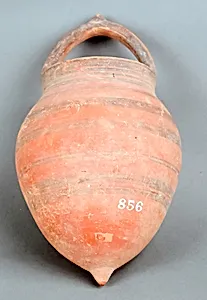
Amphoriskos
Unknown Artist
850–750 BCE
Medium
Terracotta
Dimensions
H. 4 3/4 in. (12.1 cm)
Classification
Vases
Culture & Period
Cypriot · Cypro-Geometric III
Department
Greek and Roman Art
Museum
Metropolitan Museum of Art, New York, NY
Credit
The Cesnola Collection, Purchased by subscription, 1874–76
Accession Number
74.51.624
Rights
Public Domain
Art Historical Context
This delicate amphoriskos, a small terr vase from ancient Cyprus dating to the Cypro-Geometric III period850–750 BCE), just 4 3/4 inches tall, perfect for holding precious oils, perfumes, or unguents in daily rituals or trade. Crafted from fired clay, it exemplifies the utilitarian yet refined pottery of Cypriot artisans during the early Iron Age, when the island served as a vibrant crossroads of Mediterranean cultures, blending local traditions with influences from Greece, the Near East, and Anatolia. In the Cypro-Geometric style, such vessels featured simple, elegant forms often decorated with linear patterns, concentric circles, or banded motifs incised or painted onto the clay before firing—a technique that highlighted the potter's skill with the wheel and burnishing tools. This amphoriskos reflects Cyprus's role as a prosperous hub for craftsmanship and commerce, where terracotta wares were exported widely, underscoring the island's cultural and economic significance. Acquired as part of The Cesnola Collection at The Metropolitan Museum of Art in 1874–76, this piece offers a tangible link to Cyprus's enigmatic past, inviting visitors to imagine the scented offerings it once contained in ancient households or sanctuaries.