
Amphoriskos
Unknown Artist
600–480 BCE
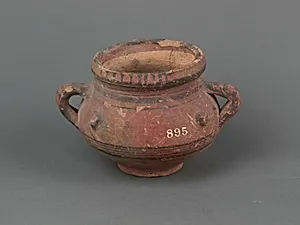
Medium
Terracotta
Dimensions
H. 3 3/8 in. (8.6 cm)
Classification
Vases
Culture & Period
Cypriot · Cypro-Archaic II
Department
Greek and Roman Art
Museum
Metropolitan Museum of Art, New York, NY
Credit
The Cesnola Collection, Purchased by subscription, 1874–76
Accession Number
74.51.653
Rights
Public Domain
Art Historical Context
This delicate amphoriskos, a small terracotta vase from ancient Cyprus dating to the Cypro-Archaic II period (600–480 BCE), invites us into a vibrant Mediterranean crossroads. Standing just 3 3/8 inches (8.6 cm) tall, it exemplifies the miniature vessels crafted for holding precious oils, perfumes, or unguents—essentials in daily rituals, trade, and burial practices. Made from fired clay, terracotta was prized for its durability and affordability, allowing Cypriot potters to produce finely shaped forms on the wheel. Cyprus, strategically located between Greece, the Near East, and Egypt, flourished as a cultural melting pot during this era. Cypro-Archaic II pottery often blended local traditions with foreign influences, reflecting the island's role in maritime commerce. Though the artist remains unknown, such vases highlight skilled craftsmanship in a time when Cyprus asserted independence amid Assyrian and Persian pressures. Acquired as part of The Cesnola Collection (purchased by subscription, 1874–76), this amphoriskos resides in the Metropolitan Museum of Art's Greek and Roman Art Department. It offers a tangible link to Cyprus's ancient ingenuity, reminding us how everyday objects encapsulated a world's interconnectedness.