
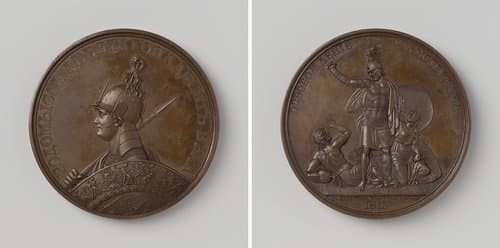
Amsterdam bevrijd van het Franse juk door Alexander I
1836
Medium
striking (metalworking)
Dimensions
6.5; 123.93
Rights
Public Domain
About this artwork
diameter 6.5 cm x weight 123.93 gr
Art Historical Context
Behold this exquisite struck medal, *Amsterdam bevrijd van het juk door Alexander I (Amsterdam Freed from the French Yoke Alexander I), crafted by A. Kleinkoff in 1836. Measuring just 6.5 cm in diameter and weighing a substantial 123.93 grams, this small yet hefty piece exemplifies 19th-century metalworking artistry. Struck medals like this were popular commemorative objects, blending fine craftsmanship with historical narrative, often produced to celebrate pivotal events long after they occurred. The medal honors a triumphant moment from the Napoleonic Wars: the 1813 liberation of Amsterdam from French occupation. Russian forces under Tsar Alexander I played a key role in driving out Napoleon's troops, marking the end of over a decade of foreign domination and sparking widespread jubilation across the Netherlands. Created over two decades later, it reflects lingering national pride and nostalgia for that era of renewal, serving as a tangible reminder of Russian-Dutch alliance against tyranny. Kleinkoff's technique of striking—hammering heated metal into detailed dies—captures intricate motifs of victory and freedom on both sides, showcasing the precision of European medal engraving. As a cultural artifact, it highlights how such portable treasures preserved collective memory, making history intimate and wearable for 19th-century collectors and patriots. A gem for any numismatics enthusiast!