
Amulet
Unknown Artist
30 BCE–364 CE
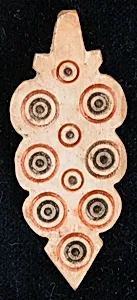
Medium
Bone; incised and inlaid with paint
Dimensions
H. 2 3/16 in. (5.6 cm) W. 7/8 in. (2.2 cm) D. 1/4 in. (0.6 cm) Wt. 0.256 oz. (7.258 g)
Classification
Ivories and Bone
Department
Islamic Art
Museum
Metropolitan Museum of Art, New York, NY
Credit
Gift of Egypt Exploration Fund, 1902
Accession Number
02.4.188
Rights
Public Domain
Tags
Art Historical Context
This delicate bone amulet, crafted 30 BCE and 364 CE, hails from ancient Egypt during the Roman and early Byzantine periods. Measuring just over 2 inches tall, it exemplifies the portable personal artifacts that bridged pagan, Jewish, Christian, and emerging cultural influences in the Nile Valley. Donated to the Metropolitan Museum Art in 1902 by the Egypt Exploration Fund, it resides in the Islamic Art department, reflecting the Met's broad curation of Egypt's multifaceted heritage, including Coptic traditions. Fashioned from bone—a lightweight, accessible medium for everyday talismans—the amulet features incised designs filled with paint, a technique that created vibrant, enduring contrasts despite its modest scale. Incising involved precise carving to outline motifs, while paint inlays added color and symbolic power, making it both functional and visually striking. Amulets like this were worn or carried for protection against evil, illness, or misfortune, underscoring ancient beliefs in the magical potency of inscribed objects. Though its exact imagery remains unrecorded here, such artifacts reveal the artistry of anonymous makers who blended utility with spirituality, offering a tangible window into daily life in Roman Egypt. A charming survivor from antiquity, it invites us to ponder the universal human quest for safeguarding.