
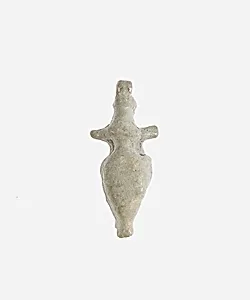
Amulet: Hes Vase
Unknown Artist
ca. 1390–1352 B.C.
Medium
Faience
Dimensions
H. 1.5 cm (9/16 in)
Classification
Amulet, Hes vase
Period
New Kingdom
Department
Egyptian Art
Museum
Metropolitan Museum of Art, New York, NY
Credit
Rogers Fund, 1911
Accession Number
11.215.200
Rights
Public Domain
Art Historical Context
This diminutive faience amulet, known as the Hes Vase, hails from Egypt's New Kingdom, specifically Dynasty 18 (ca. 1390–1352 B.C.), a golden age of imperial power and artistic splendor under phs like Amenhotep III and Akhenaten. Standing just 1.5 cm tall, this tiny blue-green vessel captures the essence of ancient Egyptian devotion, likely worn as a protective talisman or pendant. The "hes" form mimics a ceremonial offering vase used in temple rituals and festivals, symbolizing abundance and divine favor. Crafted from faience—a composite of crushed quartz glazed to imitate lapis lazuli or turquoise— the amulet showcases a key Egyptian technique for mass-producing vibrant, affordable objects imbued with magical potency. Faience's glassy sheen and enduring color made it ideal for amulets, believed to harness the Nile's life-giving magic against misfortune or illness. Acquired through the Rogers Fund in 1911, this piece now graces the Metropolitan Museum of Art's Egyptian collection, offering a window into everyday spirituality. Though small, it reveals how ancient Egyptians wove the sacred into the personal, blending artistry with profound cultural beliefs.