
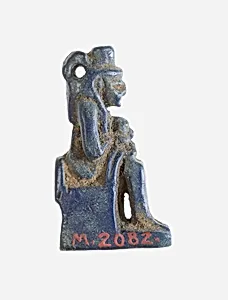
Amulet, Isis, Horus
Unknown Artist
664–332 B.C.
Medium
Lapis lazuli
Dimensions
L. 11/16 in.
Classification
Amulet, Isis, Horus
Period
Late Period
Department
Egyptian Art
Museum
Metropolitan Museum of Art, New York, NY
Credit
Gift of Helen Miller Gould, 1910
Accession Number
10.130.2082
Rights
Public Domain
Tags
Art Historical Context
This exquisite lapis lazuli amulet, measuring just 11/16 in length, captures the divine duo of Isis and Horus Egypt's Late Period (Dynasties26–30, 664–332 B.C.).ed by an unknown artist, it exemplifies the era's devotion to personal protective talismans, small enough to wear as jewelry or carry for safeguarding against misfortune. Lapis lazuli, a blue stone imported from distant Afghanistan, was revered in ancient Egypt for its celestial hue evoking the night sky and divine realms, making it a luxurious choice for sacred objects. Isis, the powerful goddess of magic and motherhood, is often depicted nursing or sheltering her son Horus, the falcon-headed sky god and symbol of kingship. This intimate pairing promised protection, fertility, and royal favor to the wearer, reflecting enduring religious beliefs amid political shifts in the Late Period. Such amulets were ubiquitous in daily life, bridging the mortal world and the divine. A generous gift to the Metropolitan Museum of Art from Helen Miller Gould in 1910, this piece invites us to ponder the ancient Egyptians' profound faith in these mother-son guardians, whose legacy influenced cultures far beyond the Nile.