
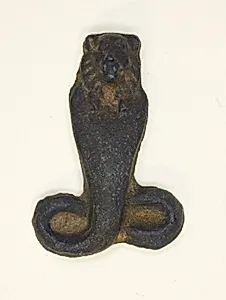
Amulet of a Lion-Headed Cobra
Ptolemaic Period–Roman Period, 4th century BCE–4th century CE
Medium
Glass
Dimensions
3.2 × 2.2 × 0.9 cm (1 5/16 × 7/8 × 3/8 in.)
Classification
amulet
Department
Arts of Africa
Museum
Art Institute of Chicago
Accession Number
140909
Rights
Public Domain
About this artwork
With the body of a rearing cobra and the head of a ferocious lion, this faience amulet is small but mighty. During the mummification process, amulets like this one were folded into the linen wrappings of a body to protect the deceased. Such objects often depicted gods and goddesses in their human, animal, or mixed forms. This amulet likely represents a goddess— either Sekhmet or Wadjet— but because the image is not inscribed with a name, her identity remains uncertain. Sekhmet typically is depi...
Art Historical Context
This delicate glass amulet, crafted in the form of a lion-headed cobra, offers a fascinating glimpse into the protective magic of ancient Egyptian belief. Measuring just over an inch tall, the tiny object was likely worn or carried as a charm to ward off harm. The hybrid creature combines the cobra’s regal uraeus form—long associated with divine kingship and protection—with the fierce power of a lion, creating a potent symbol of guardianship that would have resonated across centuries of Egyptian tradition. Dating from the Ptolemaic Period through the Roman era, this amulet reflects a time when Egyptian religious practices blended with Greek and later Roman influences while maintaining deep roots in earlier customs. Glass, a material prized for its luminous quality and ability to mimic precious stones, was especially suitable for such objects; artisans could mold it into intricate shapes that caught the light, enhancing the amulet’s perceived spiritual energy. Today housed in the Art Institute of Chicago’s collection of African art, the piece reminds us how small, everyday objects carried profound cultural weight. Its survival across two millennia speaks to both the enduring appeal of Egyptian iconography and the skill of ancient glassworkers who transformed humble material into lasting talismans of protection.
About the Artist
Ancient Egyptian
Ancient Egyptian artists, a collective of highly skilled artisans spanning over three millennia from the Predynastic period (c. 6000–3150 BC) to the Roman era (30 BC–4th century AD), produced some of humanity's most enduring masterpieces. These anonymous craftsmen, often organized in state-sponsored workshops, lived in dedicated communities like Deir el-Medina near Luxor during the New Kingdom (c....