
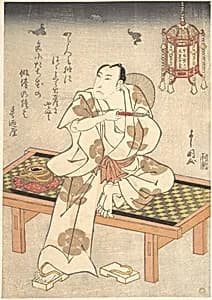
An Actor of the Ichimura Line Sitting on a Shogi (Wooden Bench) and Holding a Pipe
Medium
Woodblock print; ink and color on paper
Dimensions
H. 14 5/8 in. (37.1 cm); W. 10 1/4 in. (26 cm)
Classification
Prints
Culture & Period
Japan · Edo period (1615–1868)
Department
Asian Art
Museum
Metropolitan Museum of Art, New York, NY
Credit
Gift of Estate of Samuel Isham, 1914
Accession Number
JP1020
Rights
Public Domain
Tags
Art Historical Context
In the vibrant world of Edo-period Japan (1615–1868), woodblock prints like this one captured the "floating world" of theater, pleasure districts, and everyday life. Titled *An Actor of the Ichimura Sitting on a ShogiWooden Bench) and a Pipe*, this work by Ippyotei Yoshik depicts a male kabuki performer from the prestigious Ichimura theater lineage. Seated casually on a traditional wooden bench with a pipe in hand—likely a kiseru—and surrounded by lanterns, the actor embodies the charisma and backstage relaxation of these celebrated stars, who were as idolized as modern celebrities. Yoshikuni, a ukiyo-e artist active in the mid-18th century, masterfully employed the woodblock technique: intricate carvings on wooden blocks allowed for precise layering of ink and vibrant colors on paper, creating dynamic compositions at an affordable oban size (about 14⅝ × 10¼ inches). This print's intimate portrayal highlights the cultural obsession with yakusha-e (actor prints), which democratized access to kabuki icons for urban audiences in Edo (modern Tokyo). A gift to the Metropolitan Museum of Art from the Estate of Samuel Isham in 1914, this piece offers a window into Japan's theatrical golden age, where art blurred lines between stage and street, preserving fleeting moments of elegance and humanity.