
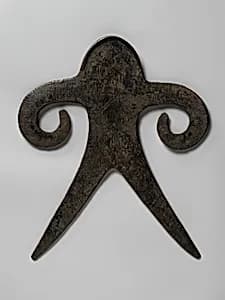
Anthropomorph
Unknown Artist
1500–500 BCE
Medium
Copper
Dimensions
H. 19 1/2 in. (49.5 cm); W. 14 3/4 in. (37.5 cm)
Classification
Metalwork
Culture
India
Department
Asian Art
Museum
Metropolitan Museum of Art, New York, NY
Credit
Samuel Eilenberg Collection, Bequest of Samuel Eilenberg, 1998
Accession Number
2000.284.37
Rights
Public Domain
Art Historical Context
Behold the enigmatic *Anthropomorph*, a copper figure from ancient India, crafted between 1500 and 500 BCE. Standing at ½ inches tall and 14¾ inches wide, this metalwork masterpiece captures a human-like form, evoking the spiritual and artistic sensibilities of a formative era in South Asian history. Housed in the Metropolitan Museum Art's Asian Art Department it entered the collection through the generous bequest of Samuel Eilenberg in1998. Dating to the late Bronze Age through the early Iron Age, this piece reflects India's early mastery of copper metallurgy—a medium prized for its durability and workability. Artisans likely employed techniques like hammering, casting, or repoussé to shape the metal, creating a testament to technological prowess amid shifting cultural landscapes, from post-Harappan societies to Vedic traditions. Such anthropomorphic figures often served ritual or votive purposes, bridging the human and divine in everyday worship. Though its creator remains unknown, the *Anthropomorph* offers a window into ancient Indian ingenuity, where form met symbolism in enduring bronze-hued elegance. A rare survivor from millennia past, it invites us to ponder the lives and beliefs of its makers.