
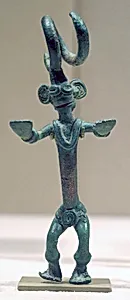
Anthropomorphic Figure
Unknown Artist
ca. 500 BCE–300 CE
Medium
Bronze
Dimensions
H. 3 5/16 in. (8.4 cm)
Classification
Metalwork
Culture & Period
Indonesia (Sumatra) · Bronze and Iron Age period
Department
Asian Art
Museum
Metropolitan Museum of Art, New York, NY
Credit
Samuel Eilenberg Collection, Bequest of Samuel Eilenberg, 1998
Accession Number
2001.433.554
Rights
Public Domain
Tags
Art Historical Context
This enigmatic *Anthropomorphic Figure*, in bronze around 500 BCE to 300 CE, hails from Sumatra, Indonesia, during the Bronze Iron Age. Standing just3 5/16 (8.4 cm), this petite metal piece from the Metropolitan Museum of Art's Asian Art collection captures a human-like form with possible mythical traits, as suggested by its classification. Likely produced using lost-wax casting—a sophisticated technique for the era—this figurine exemplifies early Southeast Asian metallurgy, where bronze objects often served ritual or ceremonial purposes. Originating from Sumatra's ancient cultures, the figure reflects a time when island societies blended human and supernatural elements in art, possibly representing ancestors, spirits, or deities. Such anthropomorphic sculptures were rare and precious, symbolizing connections between the earthly and divine amid emerging trade networks across the Indian Ocean. Acquired through the Samuel Eilenberg Collection in 1998, this artifact offers a window into pre-literate Sumatran spirituality, highlighting the region's pivotal role in early metalworking innovations that influenced later Hindu-Buddhist traditions. A testament to anonymous artisans' skill, it invites visitors to ponder the mysteries of Indonesia's ancient worldview.