
Antiope
17th century
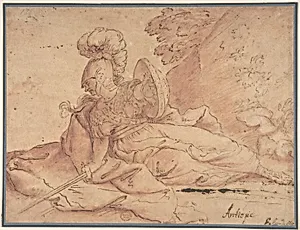
Medium
Pen and brown ink, with red chalk wash
Dimensions
sheet: 8 7/8 x 11 1/2 in. (22.5 x 29.2 cm)
Classification
Drawings
Department
Drawings and Prints
Museum
Metropolitan Museum of Art, New York, NY
Credit
Gift of Cornelius Vanderbilt, 1880
Accession Number
80.3.62
Rights
Public Domain
Tags
Art Historical Context
Nestled in the Metropolitan Museum of Art's Drawings and Prints department, *Antiope* is a 17th-century Italian drawing, gifted by Cornelius Vanderbilt in 1880. Created anonymously by an Italian artist during the Baroque era, this sheet measures 8⅞ × 11½ inches and depicts the mythological figure Antiope amid soldiers, evoking classical tales of pursuit and divine encounter. Antiope, often portrayed in Renaissance and Baroque art as a mortal woman seduced by Zeus (as the satyr or in disguise), here gains drama through the inclusion of soldiers, suggesting a narrative of conflict or captivity drawn from ancient myths. Executed in pen and brown ink with a subtle red chalk wash, the work showcases virtuoso techniques typical of Italian draftsmanship. The precise ink lines define forms and movement, while the chalk adds warm tonal depth and modeling, mimicking the chiaroscuro effects prized in Baroque art for heightening emotional intensity. Such mixed-media drawings were often preparatory studies for paintings or independent treasures, valued for their spontaneity and skill. This anonymous gem reflects the 17th-century Italian fascination with mythological subjects, blending sensuality and tension to engage viewers. Its survival as a collector's prize underscores the enduring appeal of Baroque drawings, inviting us to ponder the untold stories in its fluid lines.