
Apothecary jar (albarello)
Unknown Artist
ca. 1530–40
Medium
Maiolica (tin-glazed earthenware)
Dimensions
Height: 7 11/16 in. (19.5cm)
Classification
Ceramics-Pottery
Culture
Italian, Castelli
Department
Robert Lehman Collection
Museum
Metropolitan Museum of Art, New York, NY
Credit
Robert Lehman Collection, 1975
Accession Number
1975.1.1049
Rights
Public Domain
Tags
Art Historical Context
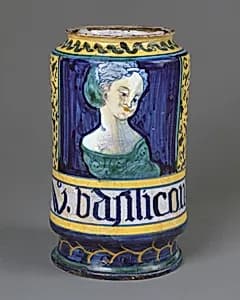
This elegant apothecary jar, known as an *albarello*, hails from Castelli, Italy, around 1530–40, during the vibrant Renaissance period. Crafted from maiolica—tin-glazed earthenware—this 7 11/16-inch (19.5 cm) vessel exemplifies the region's mastery of ceramics. Maiolica's shiny white glaze provided a perfect canvas for bold colors and intricate designs, transforming everyday objects into works of art. The tall, cylindrical shape with a narrowed base was ideal for stacking in apothecaries' shops, where such jars stored herbs, spices, or medicines. In Renaissance Italy, Castelli was a hub for maiolica production, blending utility with artistic flair. These jars often featured lively motifs, including female figures (as suggested by the artwork's tags), drawn from classical myths, daily life, or symbolic imagery to identify contents or simply delight the eye. This piece reflects the era's fusion of science and aesthetics—apothecaries were early pharmacists, and their wares bridged medicine and decoration. Now part of the Robert Lehman Collection at the Metropolitan Museum of Art (acquired 1975), this anonymous masterpiece invites us to appreciate how humble pottery captured Italy's cultural renaissance, where beauty enhanced even the practical.