
Apothecary jar (albarello)
Unknown Artist
17th century
Medium
Maiolica (tin-glazed earthenware)
Dimensions
Height: 12 5/8 in. (32 cm)
Classification
Ceramics-Pottery
Culture
Italian
Department
Robert Lehman Collection
Museum
Metropolitan Museum of Art, New York, NY
Credit
Robert Lehman Collection, 1975
Accession Number
1975.1.1139
Rights
Public Domain
Tags
Art Historical Context
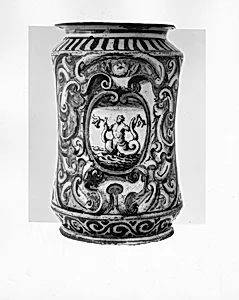
This elegant *albarello*, or apothecary jar, hails from 17th-century Italy and stands at 12⅝ inches tall, crafted from maiolica—tin-glazed earthenware renowned for its vibrant colors and glossy finish. Maiolica technique, perfected in Italian workshops during the Renaissance and flourishing into the Baroque era, involved firing earthenware twice: first to harden the clay, then applying a tin-based glaze that allowed bold painted designs to shine through without fading. This jar's cylindrical shape with a flared base and narrow neck was ideal for pharmacies, enabling easy stacking on shelves and clear labeling of medicinal contents like herbs, spices, or ointments. Part of the Robert Lehman Collection at The Metropolitan Museum of Art, this piece reflects Italy's rich ceramic tradition, where everyday functional objects doubled as canvases for artistic expression. Decorated with lively mermen—mythical half-human, half-fish figures frolicking amid waves—the jar evokes the era's fascination with classical mythology and the sea's wonders, blending utility with whimsy. Such vessels were essential to apothecaries, safeguarding remedies in an age before modern medicine, and offer a glimpse into 17th-century daily life, trade, and craftsmanship.