
Apothecary Vase (vaso da farmacia)
Unknown Artist
ca. 1515
Medium
Maiolica (tin-glazed earthenware)
Dimensions
H. 11 7/8 in. (30.2 cm)
Classification
Ceramics-Pottery
Culture
Italian, Castelli
Department
Robert Lehman Collection
Museum
Metropolitan Museum of Art, New York, NY
Credit
Robert Lehman Collection, 1975
Accession Number
1975.1.1028
Rights
Public Domain
Tags
Art Historical Context
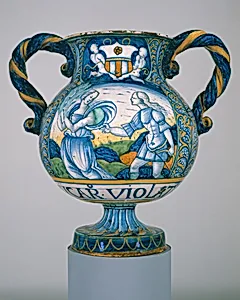
This elegant apothecary vase, or *vaso da farmacia*, hails from Castelli, Italy, around 1515, during the High Renaissance.ed in maiolica—tin-glazed earthenware—this slender vessel, standing just under 12 inches tall, was designed for storing medicines or ingredients in pharmacies. Castelli, in the Abruzzo region, a renowned center for maiolica production, where potters elevated everyday ceramics into works of art through vivid glazes and intricate designs. The vase's surface features painted scenes of men and women alongside a prominent coat of arms, likely symbolizing the pharmacy's owner or guild affiliation. Maiolica's tin glaze created a brilliant white ground perfect for bold colors and fine details, mimicking luxury porcelain from the East while showcasing Italian ingenuity. This technique allowed artists to blend functionality with storytelling, turning humble pots into status symbols. Today, housed in the Metropolitan Museum of Art's Robert Lehman Collection, this anonymous masterpiece offers a glimpse into Renaissance daily life, where science and artistry intertwined. Imagine pharmacists of the era carefully selecting these vases to display their craft— a testament to Italy's ceramic golden age.