
Archeologische vondsten in en rond Rome
c. 1756 - c. 1757
Medium
etching
Dimensions
491; 38; 371; 489
Rights
Public Domain
About this artwork
plaatrand: hoogte 371 mm (Boven.) x breedte 491 mm (Boven.) x hoogte 38 mm (Onder.) x breedte 489 mm (Onder.)
Art Historical Context
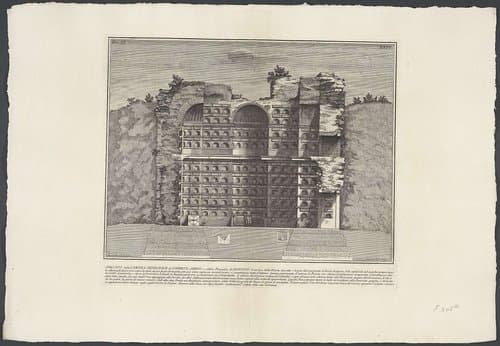
This etching by Girolamo Rossi II, created around 1756–1757, presents a detailed survey of archaeological discoveries unearthed in Rome and its environs. Measuring roughly 37 by 49 centimeters, the large-format print reflects the period’s growing fascination with classical remains, as systematic excavations began to reveal fragments of ancient temples, sculptures, and everyday objects from the city’s layered past. Rossi, working in the tradition of Italian printmakers, employed etching to render these artifacts with precision and clarity. The medium allowed wide circulation of such images at a time when the Grand Tour brought increasing numbers of scholars, artists, and collectors to Italy. His work thus served both as documentation and as an invitation to study Rome’s material heritage. Today the print offers viewers a window into eighteenth-century attitudes toward antiquity, when rediscovered objects were celebrated as tangible links to the classical world and catalysts for contemporary taste.