
Archeologische vondsten in en rond Rome
ca. 1756 - ca. 1757
Medium
etching
Dimensions
392; 601
Rights
Public Domain
About this artwork
collector's mark: Lugt 2228
Art Historical Context
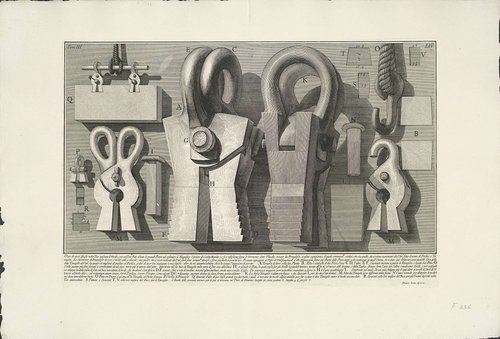
Giovanni Battista Piranesi's *Archeologische vondsten en rond Rome* (chaeological Finds in and Rome), created around 1756–1757, is a captivating etching measuring 392 × 601 mm. This print exemplifies Piranesi's passion for antiquity, showcasing a meticulous arrangement of ancient Roman artifacts—fragments of sculptures, inscriptions, and architectural elements—likely drawn from excavations near the Eternal City. As a master of the etching technique, Piranesi employed intricate line work and rich tonal contrasts to evoke the grandeur of Rome's lost past, making the static objects burst with drama and depth. In the mid-18th century, amid the Enlightenment's revival of classical ideals and the Grand Tour craze, Piranesi's works served as both scholarly documents and artistic celebrations of Roman heritage. A Venetian-born architect-turned-printmaker, he belonged to the Vedutisti tradition, blending precise topography with imaginative flair to inspire neoclassical architects like Robert Adam. This etching, bearing the collector's mark Lugt 2228 (indicating esteemed provenance), reflects the era's archaeological fervor, preserving treasures that fueled Europe's fascination with antiquity. Piranesi's etchings were revolutionary for their scale and detail, often printed on large sheets to immerse viewers in history. For museum-goers, this piece invites reflection on how art bridges eras, turning excavated relics into timeless wonders.
About the Artist
Giovanni Battista Piranesi · 1720–1778
Giovanni Battista Piranesi (1720–1778) was an Italian printmaker, architect, and antiquarian whose visionary etchings of Rome and imaginary prisons revolutionized architectural representation and profoundly influenced both Neoclassicism and Romanticism. Piranesi stands as one of the most important printmakers of the eighteenth century, fundamentally shaping European perceptions of ancient Rome an...