
Archeologische vondsten in en rond Rome
c. 1756 - c. 1757
Medium
etching
Dimensions
403; 655
Rights
Public Domain
About this artwork
verzamelaarsmerk, verso, gestempeld: Lugt 2228
Art Historical Context
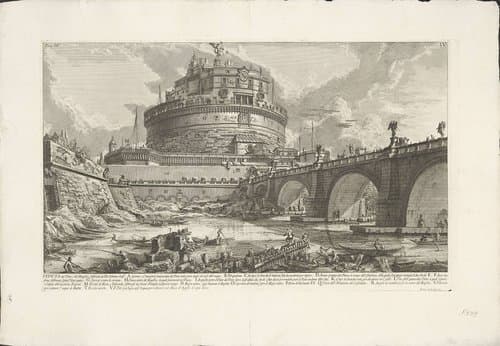
Giovanni Battista Piranesi's *Archeologische vondsten in en rond Rome*Archaeological Finds in and around Rome), created around 1756–1757, the artist's lifelong fascination with ancient Roman antiquities. As a leading figure in 18th-century Vedut—the precise, atmospheric depiction of real and imagined architecture—Piranesi documented Rome's ruins and artifacts with dramatic flair. This etching, measuring 403 × 655 mm, likely excavated treasures from the Eternal City and its environs, reflecting the era's growing archaeological enthusiasm during the Grand Tour, when European elites flocked to Italy to study classical heritage. Piranesi's mastery of etching shines here: his intricate line work and deep burr create textures that evoke stone's weight and history's patina, blending factual precision with romantic grandeur. Produced amid his prolific output of over 2,000 prints, work exemplifies his role in preserving and romanticizing antiquity, influencing Neoclassicism and archaeology. On the verso, a collector's mark (Lugt 2228) hints at its esteemed provenance, underscoring its value in museum collections. For visitors, it offers a window into Rome's buried past, inviting wonder at how Piranesi transformed fragments into timeless narratives.
About the Artist
Giovanni Battista Piranesi · 1720–1778
Giovanni Battista Piranesi (1720–1778) was an Italian printmaker, architect, and antiquarian whose visionary etchings of Rome and imaginary prisons revolutionized architectural representation and profoundly influenced both Neoclassicism and Romanticism. Piranesi stands as one of the most important printmakers of the eighteenth century, fundamentally shaping European perceptions of ancient Rome an...