
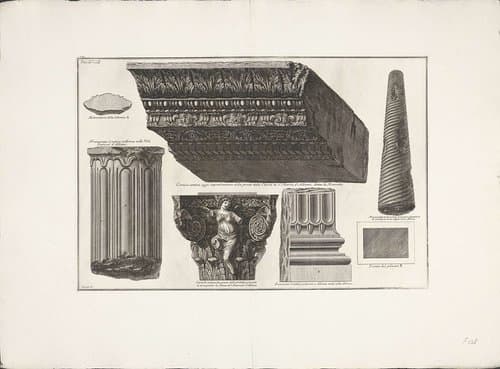
Archeologische vondsten uit Albano en Castel Gandolfo
Medium
etching
Dimensions
375; 560
Rights
Public Domain
About this artwork
verzamelaarsmerk, verso, gestempeld: Lugt 2228
Art Historical Context
Giovanni Battista Piranesi's *Archeologische vondsten uit Alb en Castel Gandolfo* (Archaeological Finds from Albano and Castel Gandolfo), an etching from 1764, captures the with ancient Rome during the Enlightenment. Measuring 375 × 560 mm, this-scale print showcases artifacts unearthed near these historic sites south of Rome—towns linked to imperial villas and early Christian history. Piranesi, a Venetian-born architect and artist (1720–1778), documented such discoveries amid 18th-century excavations, fueling the Grand Tour era's obsession with classical antiquity. Renowned for his vedute (topographical views) and intricate etchings, Piranesi employed the medium's precision to render textures, shadows, and archaeological details with dramatic intensity. Etching allowed him to produce richly toned plates, blending factual reportage with imaginative flair, as seen in his seminal *Vedute di Roma*. This work exemplifies his role in preserving vanishing Roman heritage through printmaking, making antiquities accessible to collectors across Europe. Verso bears a collector's mark (Lugt 2228), underscoring its provenance and enduring appeal among connoisseurs. A testament to Piranesi's legacy, it invites us to ponder the layered histories buried beneath Italy's landscape.
About the Artist
Giovanni Battista Piranesi · 1720–1778
Giovanni Battista Piranesi (1720–1778) was an Italian printmaker, architect, and antiquarian whose visionary etchings of Rome and imaginary prisons revolutionized architectural representation and profoundly influenced both Neoclassicism and Romanticism. Piranesi stands as one of the most important printmakers of the eighteenth century, fundamentally shaping European perceptions of ancient Rome an...