
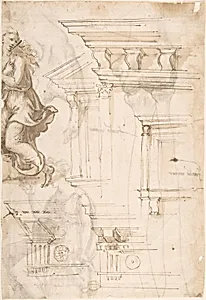
Architectural Sketches and a Figure (recto); Figure and Anatomical Sketches (verso)
16th century
Medium
Pen and brown ink, brown wash
Dimensions
10-5/8 x 7-1/4 in. (27 x 18.4 cm)
Classification
Drawings
Department
Drawings and Prints
Museum
Metropolitan Museum of Art, New York, NY
Credit
Gift of Cornelius Vanderbilt, 1880
Accession Number
80.3.613
Rights
Public Domain
Tags
Art Historical Context
This exquisite double-sided sheet from 16th-century Italy captures the dynamic energy of Renaissance artistic practice. On the recto, precise architectural sketches mingle with a solitary figure, suggesting studies for buildings or stage sets, while the verso features fluid figure drawings alongside anatomical details—hallmarks of an artist's exploratory notebook. Rendered in pen and brown ink heightened with brown wash on a modest 10-5/8 x 7-1/4 inch sheet, it reveals the intimate, preparatory nature of drawing during this era. In the bustling workshops of Renaissance Italy, anonymous draftsmen like this one honed skills essential for painters, sculptors, and architects. The medium—inexpensive yet expressive—allowed for quick notations of proportion, perspective, and human form, influenced by masters like Leonardo da Vinci or Albrecht Dürer. Architectural motifs reflect the period's obsession with classical revival, seen in Brunelleschi's domes and Palladio's designs, blending utility with artistic invention. A generous gift to the Metropolitan Museum of Art from Cornelius Vanderbilt in 1880, this drawing offers a window into the unsung labor behind Italy's golden age of art. Visitors, flip it mentally: each side tells a story of creativity in motion.