
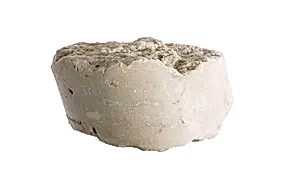
Arm fragment
Unknown Artist
ca. 1353–1336 B.C.
Medium
Indurated limestone
Dimensions
H. 3.4 × W. 6.9 × Th. 3.8 cm (1 5/16 in. × 2 11/16 in. × 1 1/2 in.)
Classification
Arm fragment
Period
New Kingdom, Amarna Period
Department
Egyptian Art
Museum
Metropolitan Museum of Art, New York, NY
Credit
Harris Brisbane Dick Fund, 1957
Accession Number
57.180.112
Rights
Public Domain
Art Historical Context
This delicate arm fragment, carved from indurated limestone around 1353–1336 B.C., hails from Egypt's New Kingdom during the revolutionary Amarna Period of Dynasty 18. Measuring just 3.4 cm high, it likely once belonged to a statue, possibly of a royal figure, amid the artistic upheaval sparked by Pharaoh Akhenaten. This era marked a bold shift from rigid, idealized pharaonic forms to more naturalistic, elongated proportions celebrating the sun god Aten. Indurated limestone, a fine-grained stone that hardens over time, was prized for its workability, allowing sculptors to achieve smooth surfaces and subtle muscle definition seen in the arm's graceful curve. Techniques like incising and polishing highlight the period's emphasis on lifelike anatomy, departing from tradition to convey vitality and informality. As a survivor from Amarna's short-lived capital, this fragment offers a tantalizing glimpse into one of ancient Egypt's most experimental artistic phases. On view in the Metropolitan Museum of Art's Egyptian Art galleries, courtesy of the Harris Brisbane Dick Fund (1957), it reminds us how even broken pieces whisper tales of innovation and devotion.