
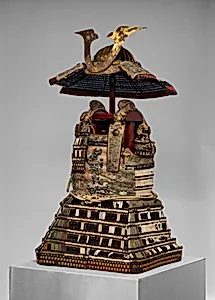
Armor (<i>Yoroi</i>) of Ashikaga Takauji (1305–1358)
Unknown Artist
early–mid-14th century
Medium
Iron, leather, lacquer, silk, copper, gold, pigments
Dimensions
H. as mounted 42 3/4 in. (108.59 cm); W. 24 1/4 in. (61.6 cm); Wt. 38 lb. 3 oz. (17.3 kg)
Classification
Armor for Man
Culture
Japanese
Department
Arms and Armor
Museum
Metropolitan Museum of Art, New York, NY
Credit
Gift of Bashford Dean, 1914
Accession Number
14.100.121a–e
Rights
Public Domain
Tags
Art Historical Context
Step into the turbulent world of 14th-century Japan with this striking *yoroi* (samurai armor) attributed to Ashikaga Takauji (1305–1358), the powerful warlord who founded the Ashaga shogunate and helped usher in the Muromachi period. Crafted in the early to mid-1300s, this armor embodies the era's blend of warfare and imperial ambition, when samurai like Takauji navigated civil strife, overthrowing the Kamakura shogunate to control. At 42¾ inches tall and weighing over 38 pounds, it evokes the formidable presence of a mounted warrior on the battlefield. Masterfully constructed from iron plates laced with leather, silk, and copper, the armor is enhanced by lacquer, gold, and pigments for both protection and prestige. These techniques—hallmarks of Japanese arms craftsmanship—created a flexible yet resilient form, often adorned with motifs like deities (as suggested by its tags), invoking divine favor for victory. The unknown artist's work highlights how samurai gear transcended utility, becoming symbols of status and spirituality. A gift to the Metropolitan Museum of Art in 1914, this piece from the Arms and Armor department invites you to marvel at Japan's artistic fusion of function and beauty, where every gleaming detail tells a story of power and piety.