
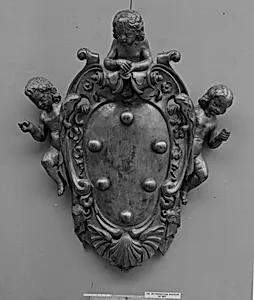
Arms of Counts de Medici
Unknown Artist
late 17th–early 18th century
Medium
Carved and gilded wood
Dimensions
Overall: 55 × 45 in. (139.7 × 114.3 cm)
Classification
Woodwork
Culture
Italian, Florence
Department
European Sculpture and Decorative Arts
Museum
Metropolitan Museum of Art, New York, NY
Credit
Rogers Fund, 1918
Accession Number
18.70.39
Rights
Public Domain
Tags
Art Historical Context
Nestled in the Metropolitan Museum of Art's European Sculpture and Decorative Arts, the *Arms of Counts de Medici is a splendid example of late 17th- to early 18th-centuryentine woodwork. Crafted by an unknown artist, this carved and gilded wood panel measures an impressive 55 × 45 inches, showcasing the Medici family's illustrious coat of arms—symbols of their enduring power and patronage in Renaissance and Baroque Florence. Flanked by playful putti (cherubic figures), it evokes the grandeur of palatial interiors, where such heraldic displays affirmed lineage and prestige. The artwork's medium highlights masterful Italian techniques: intricate carving brings the Medici emblem and lively putti to life, while gilding adds a radiant, luxurious sheen that catches the light, mimicking gold leaf on furniture or wall panels. This opulent finish was typical of Baroque decorative arts, blending sculpture with architecture to create immersive environments of wealth and piety. As a Rogers Fund acquisition from 1918, this piece offers a tangible link to Florence's cultural golden age. The Medici, once rulers and art benefactors, inspired such emblems long after their political peak, reminding visitors of Italy's rich heraldic tradition and the artistry that celebrated noble heritage.