
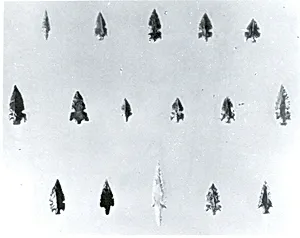
Arrowhead
Unknown Artist
ca. 7500–4500 BCE (?)
Medium
Flint
Dimensions
1 x 0.56 in. (2.54 x 1.42 cm)
Classification
Stone-Implements
Period
Neolithic or Chalcolithic
Department
Ancient Near Eastern Art
Museum
Metropolitan Museum of Art, New York, NY
Credit
Gift of H. Dunscombe Colt, 1953
Accession Number
53.151.11
Rights
Public Domain
Art Historical Context
This delicate flint arrowhead, dating to approximately 7500–4500 BCE, hails from the Neolithic or Chalcolithic periods in the Ancient Near East—a time of profound transition from nomadic hunter-gatherer societies early farming communities. Crafted by an unknown artisan, it exemplifies the stone tools that were essential for survival, likely serving as a projectile point for or spears used in hunting or defense. Its petite size— just 1 x 0.56 inches—highlights the remarkable precision achieved with basic materials in a pre-metal age. Flint, a hard, fine-grained sedimentary rock, was prized for its ability to produce sharp edges when expertly knapped, or chipped away, through careful percussion and pressure techniques. This method allowed prehistoric peoples to create lethal, reusable weapons that marked technological advancements, possibly even early signs of social organization or conflict. In the context of the Ancient Near East, such implements offer glimpses into daily life amid the region's fertile crescents, where innovations laid the groundwork for civilization. A generous gift to the Metropolitan Museum of Art in 1953, this arrowhead invites us to ponder the ingenuity of our distant ancestors—tiny yet telling survivors of a world without writing or wheels.