
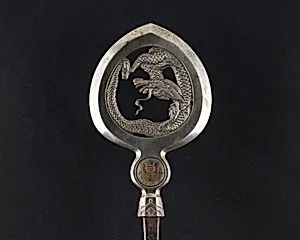
Arrowhead (<i>Yanone</i>)
Unknown Artist
dated 1645
Medium
Steel
Dimensions
L. 11 3/8 in. (28.9 cm); L. of head 4 1/2 in. (11.4 cm); W. 2 7/8 in. (7.3 cm); Wt. 6.5 oz. (184.3 g)
Classification
Archery Equipment-Arrowheads
Culture
Japanese
Department
Arms and Armor
Museum
Metropolitan Museum of Art, New York, NY
Credit
The Collection of Giovanni P. Morosini, presented by his daughter Giulia, 1932
Accession Number
32.75.402
Rights
Public Domain
Tags
Art Historical Context
This exquisite steel arrowhead, known as *yanone dates to 1645 Japan's Edo period (1603–1868), a time of relative peace under the Tokugawaogunate when samurai culture emphasized refinement over warfare. Crafted with precision, it measures 11⅜ inches in total length, with a 4½-inch head boasting a 2⅞-inch width and weighing just 6.5 ounces—ideal for powerful, accurate flight in archery. Housed in the Metropolitan Museum Art's Arms and Armor, it entered the collection in 1932 via the Morosini family gift. Yanone like this one transcend mere utility, blending functionality with artistry. Japanese arrowheads were often elaborately forged, pierced, or engraved, and the dragon motifs suggested here evoke imperial power, protection, and mythical ferocity—symbols revered in samurai lore. During the Edo era, as battles waned, archery evolved into ceremonial practices like kyūdō and yabusame (mounted archery), turning these implements into coveted collector's items that showcased the blacksmith's mastery of steel tempering and decorative techniques. A testament to Japan's fusion of martial prowess and aesthetic elegance, this *yanone* invites visitors to ponder how even weapons could embody poetic beauty in a warrior's world.