
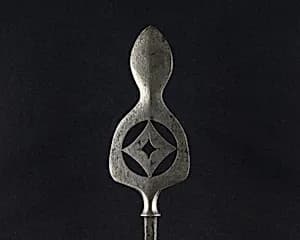
Arrowhead (<i>Yanone</i>)
Unknown Artist
18th century
Medium
Steel
Dimensions
L. 11 5/8 in. (29.5 cm); L. of head 4 1/4 in. (10.8 cm); W. 1 3/4 in. (4.5 cm); Wt. 2.6 oz. (73.7 g)
Classification
Archery Equipment-Arrowheads
Culture
Japanese
Department
Arms and Armor
Museum
Metropolitan Museum of Art, New York, NY
Credit
The Collection of Giovanni P. Morosini, presented by his daughter Giulia, 1932
Accession Number
32.75.422
Rights
Public Domain
Art Historical Context
This exquisite steel arrowhead, known as a *yanone*, hails from 18th-century Japan and exemplifies the masterful craftsmanship of the Edo period. Measuring 11⅝ inches in total length with a 4¼-inch head, it weighs a precise 2.6 ounces, optimized for flight and impact in archery. Forged from high-quality steel, its form reflects the technical precision of Japanese metalworkers, who balanced aerodynamics, durability, and lethality in archery equipment essential to samurai culture. In feudal Japan, archery (*kyūdō*) was not just a martial art but a spiritual discipline and symbol of warrior prowess, even during the relatively peaceful Edo era. Yanone like this one were designed for hunting, warfare, or ceremonial use, with varied shapes to pierce armor or deliver whistling signals. Though the artist remains unknown, such pieces highlight the anonymous yet brilliant artisans of Japan's arms tradition, blending functionality with subtle artistry. Now housed in the Metropolitan Museum of Art's Arms and Armor Department, this arrowhead entered the collection in 1932 through the generous gift of Giovanni P. Morosini, presented by his daughter Giulia. It invites visitors to ponder the intersection of technology, tradition, and tranquility in Japanese history.