
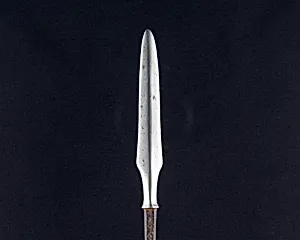
Arrowhead (<i>Yanone</i>)
Unknown Artist
18th century
Medium
Steel
Dimensions
L. 10 1/4 in. (26 cm); L. of head 3 7/8 in. (9.8 cm); W. 5/8 in. (1.6 cm); Wt. 1.3 oz. (36.9 g)
Classification
Archery Equipment-Arrowheads
Culture
Japanese
Department
Arms and Armor
Museum
Metropolitan Museum of Art, New York, NY
Credit
The Collection of Giovanni P. Morosini, presented by his daughter Giulia, 1932
Accession Number
32.75.580
Rights
Public Domain
Art Historical Context
This finely crafted steel arrowhead, known as *yanone*, hails from 18th-century Japan during the Edo period, a of relative peace when samurai traditions like archery remained central to cultural and martial identity. Measuring just 10¼ inches long with a head of nearly 4 inches, it weighs a mere 1.3 ounces—perfect balanced for swift, precise flight in hunting, warfare, or ceremonial practices such as *yabusame* (mounted archery). As part of the Metropolitan Museum of Art's Arms and Armor collection, gifted from Giovanni P. Morosini's collection in 1932, it showcases the anonymous artisan's mastery of steel forging. Japanese arrowheads like this were ingeniously varied: some pierced armor, others designed for bloodletting or whistling in flight to intimidate foes. The *yanone*'s slender, tapered form and sharp edges reflect advanced metallurgical techniques, where high-carbon steel was folded and hammered for exceptional hardness and flexibility. Beyond utility, these objects embody the *wabi-sabi* aesthetic—valuing imperfection and transience in tools of life and death. Visitors, admire how this unassuming piece whispers tales of samurai valor and exquisite craftsmanship, bridging art and history in our virtual gallery.