
Arrowhead (<i>Yanone</i>)
Unknown Artist
18th century
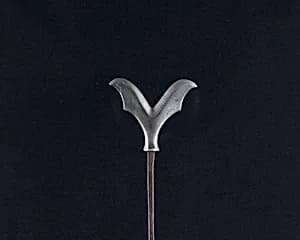
Medium
Steel
Dimensions
L. 8 in. (20.3 cm); L. of head 1 3/8 in. (3.5 cm); W. 1 5/8 in. (4.1 cm); Wt. 0.6 oz. (17 g)
Classification
Archery Equipment-Arrowheads
Culture
Japanese
Department
Arms and Armor
Museum
Metropolitan Museum of Art, New York, NY
Credit
The Collection of Giovanni P. Morosini, presented by his daughter Giulia, 1932
Accession Number
32.75.626
Rights
Public Domain
Art Historical Context
This exquisite steel arrowhead, known as a *yanone*, hails from 18th-century Japan and exemplifies the masterful craftsmanship of the Edo period. Measuring just 8 inches in total length, with a head of 1⅜ inches long and 1⅝ inches wide, it weighs a mere 0.6 ounces—light lethal, designed for precision in archery. Forged from high-quality steel, its compact form highlights the technical prowess of Japanese smiths, who balanced aerodynamics, penetration, and durability for bows like the asymmetrical *yumi*. In Japanese culture, archery was more than a weapon; it was integral to samurai warfare, hunting, and later ritual practices in *kyūdō*. Arrowheads like this *yanone* came in diverse shapes for specific uses—piercing armor, whistling in flight, or even poisoning—reflecting a blend of functionality and artistry. Though the artist remains unknown, the object's survival speaks to its value, now housed in the Metropolitan Museum of Art's Arms and Armor Department, gifted from Giovanni P. Morosini's collection in 1932. Visitors will appreciate how this unassuming piece bridges utility and elegance, offering a window into Japan's martial heritage during a time of relative peace, when such tools symbolized enduring warrior traditions.