
Astrolabium
1700 - 1750
Medium
brass (alloy)
Dimensions
7.2; 7.5
Rights
Public Domain
About this artwork
hoogte 7,5 cm (uitgeklapt) x diameter 7,2 cm
Art Historical Context
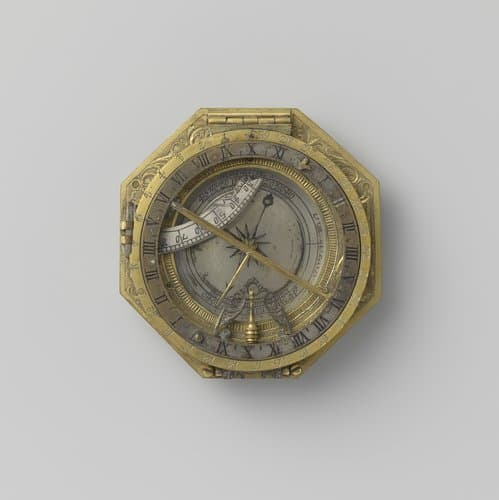
### Astrolabium by Nikolaus Rugendas (III) ed between 1700 and 1750, this exquisite *Astrolabium*—a compact brass astrolabe—comes from the skilled hands of Nikola Rugendas III, a member of the renowned German Rugendas family known for their intricate engravings and metalwork. Measuring just 7.5 cm in height when unfolded and 72 cm in diameter, pocket-sized instrument exemplifies the blend of artistry and science during the Enlightenment era, when scientific tools were as beautifully designed as they were functional. Astrolabes like this one were essential for astronomers, navigators, and scholars, allowing users to measure the altitude of stars, determine local time, and even survey land. Made from durable brass alloy, it unfolds to reveal precisely calibrated dials, scales, and sighting mechanisms, showcasing the era's mastery of precision engineering. Rugendas's work reflects the high craftsmanship of Augsburg's instrument makers, where brass was prized for its malleability and resistance to corrosion, enabling fine etchings and movable parts that have endured centuries. This piece invites us to marvel at how 18th-century ingenuity turned complex mathematics into portable elegance, bridging art and discovery in a time of scientific revolution. A true gem for any collection! (178 words)