
"Autophone" Organette
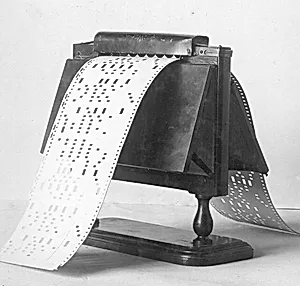
Medium
Wood, metal, various
Dimensions
H.: 26 cm (10-1/4 in.); W. of base: 25 cm (9-7/8 in.)
Classification
Aerophone-Free Reed
Culture
American
Department
Musical Instruments
Museum
Metropolitan Museum of Art, New York, NY
Credit
The Crosby Brown Collection of Musical Instruments, 1889
Accession Number
07.195a, b
Rights
Public Domain
Art Historical Context
Created in 1878 by American inventor Henry Bishop Horton, the “Autophone” Organette represents an ingenious chapter in the history of domestic music-making. This compact free-reed aerophone, standing just ten inches tall, was designed to bring melody into ordinary households without requiring formal musical training. Crafted from wood and metal, its simple-driven mechanism allowed users to play popular tunes through perforated paper rolls, foreshadowing the player-piano technology that would flourish decades later. As a product of late-nineteenth-century American ingenuity, the organette reflects the era’s growing fascination with mechanical devices that democratized music. Its modest size made it suitable for parlors and schoolrooms, where families could enjoy the latest songs without the expense of a full organ or professional performer. The instrument’s presence in the Metropolitan Museum’s Crosby Brown Collection—acquired in 1889—underscores its early recognition as both a technological curiosity and a cultural artifact worthy of preservation. Today, the Autophone offers visitors a tangible connection to a time when music began its gradual shift from live performance to reproducible entertainment. Its unassuming form belies the inventive spirit that helped lay the groundwork for modern recording and playback technologies.
About the Artist
Autophone|Henry Bishop Horton ( |American) · |1819 – |1885
|American, Winchester, Connecticut 1819–1885