
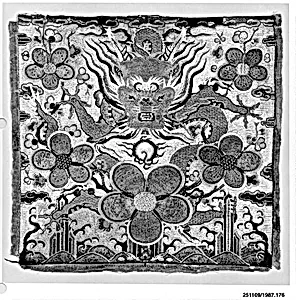
Badge with Five-Clawed Dragon Surrounded by Plum Blossoms
Unknown Artist
late 16th–early 17th century
Medium
Silk and metallic-thread embroidery on plain-weave silk
Dimensions
15 x 15 in. (38.1 x 38.1 cm)
Classification
Textiles-Embroidered
Culture & Period
China · Ming dynasty (1368–1644)
Department
Asian Art
Museum
Metropolitan Museum of Art, New York, NY
Credit
Purchase, Mrs. Andrew Saul Gift, 1987
Accession Number
1987.176
Rights
Public Domain
Tags
Art Historical Context
This exquisite embroidered badge from China's Ming dynasty (1368–1644), dating to the late 16th or 17th century, a powerful five-clawed dragon encirc by delicate plum blossoms. Crafted a square of plain-weave silk using silk and shimmering metallic threads, the 15 x 15-inch textile measures 38.1 x 38.1 cm and exemplifies the pinnacle of imperial craftsmanship. Acquired by the Metropolitan Museum of Art 1987 through the Mrs. Andrew Saul Gift it now resides in the Asian Art Department. In Ming China, such badges—known as *biao* or mandarin squares—were sewn onto the chests of officials' robes to denote rank and authority. The five-clawed dragon, a motif reserved exclusively for the emperor and highest nobility, symbolized supreme power, protection, and yang energy. Surrounding plum blossoms, which bloom resiliently in winter, evoke endurance, purity, and the promise of spring, adding layers of poetic symbolism rooted in Chinese literati culture. The embroidery technique highlights the era's technical mastery: intricate stitching with metallic threads creates a luminous, three-dimensional effect, making the dragon appear to coil dynamically against the floral backdrop. This artifact offers a glimpse into the opulent world of Ming imperial attire, blending artistry with profound cultural hierarchy.