
Bag
Unknown Artist
18th–19th century
Medium
Silk
Dimensions
4 1/4 x 5 in. (10.80 x 12.70 cm)
Classification
Textiles-Embroidered
Culture & Period
China · Qing dynasty (1644–1911)
Department
Asian Art
Museum
Metropolitan Museum of Art, New York, NY
Credit
Bequest of William Christian Paul, 1929
Accession Number
30.75.761
Rights
Public Domain
Tags
Art Historical Context
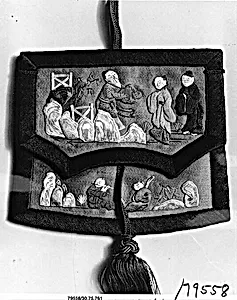
This delicate silk bag, crafted in China during the Qing dynasty (4–1911), the era's mastery of embroidered textiles. Measuring just 4¼ x 5 inches, petite accessory likely served as a pouch for personal items, such as tobacco or seals, reflecting everyday elegance in 18th–19th century life. Its surface features intricate embroidery depicting men with flutes, capturing a serene moment of musical harmony that evokes the cultural reverence for music and scholarly pursuits in imperial China. Silk, a prized export and symbol of luxury since ancient times, was the ideal medium for such finery. Qing artisans employed sophisticated techniques like satin stitch and couching to create vibrant, textured motifs that shimmered with metallic threads and vivid dyes. These bags were not mere utilities but miniature artworks, often gifts or heirlooms showcasing needlework prowess—skills honed in workshops and passed through generations. Housed in the Metropolitan Museum of Art's Asian Art collection through the 1929 bequest of William Christian Paul, this piece offers a window into Qing material culture, where textiles blended functionality, artistry, and social status. Visitors can appreciate how such humble objects preserved the dynasty's refined aesthetic amid its vast artistic legacy.