
Bag
18th century
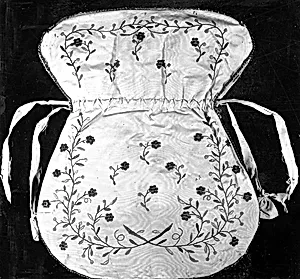
Medium
Silk, plain weave, warp-faced, moiré treatment; embroidered in silk floss, spangles, purl, metal strip wrapped on silk core; stem and satin stitches
Classification
textile
Department
Textiles
Museum
Art Institute of Chicago
Accession Number
28706
Rights
Public Domain
Art Historical Context
This exquisite 18th-century silk, housed in the Art Institute of's Textiles Department, exemplifies the opulent craftsmanship of its era. Crafted from a warp-faced plain weave with a moiré finish—a technique that creates a subtle, watery shimmer through calendering—the bag gleams with luxurious texture. Its surface is richly embroidered using silk floss, sparkling spangles, purl (a coiled metal wire), and metal strips wrapped around a silk core, all worked in precise stem and satin stitches for depth and dimension. In the 18th century, such embroidered accessories were prized status symbols, often carried by women at social events or as part of formal attire. The intricate metalwork and shimmering effects highlight the technical virtuosity of anonymous textile artists, who blended European embroidery traditions with innovative materials to evoke wealth and elegance. Though the bag's exact origin and purpose remain mysterious, its survival speaks to the enduring appeal of these delicate, functional artworks. Today, this piece invites visitors to appreciate the fusion of utility and artistry in historic textiles, reminding us how everyday objects once dazzled with personal flair and skilled handiwork.
About the Artist
Unknown
The artist designated as "Unknown" in our virtual museum's collection exemplifies a poignant chapter in art history: creators whose identities have faded into obscurity despite the enduring power of their work. With only one known artwork attributed to them in our holdings, this figure represents countless anonymous hands that shaped visual culture across centuries. Museums worldwide, including th...