
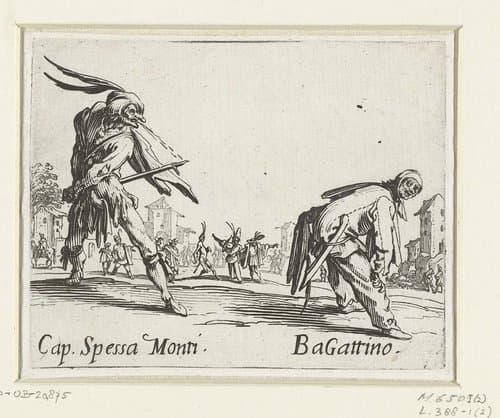
Balli di Sfessania
1621 - 1622
Medium
etching
Dimensions
92; 73
Rights
Public Domain
About this artwork
collector's mark: Lugt 240
Art Historical Context
Jacques Callot's *Balli di Sfessania* (1621–1622) is a captivating etching from a renowned series of 20 small prints depicting the wild, grotesque dances of Italian commedia dell'arte performers. Measuring just 73 × 92 mm, this intimate work captures the frenetic energy of "Sfessania," aoonish character known for his exaggerated, acrobatic antics during Florentine carnivals. Created during Callot's productive years in Italy under Medici patronage, it reflects the Baroque era's fascination with theatrical spectacle and the lower classes' exuberant revelry. As a master etcher, Callot revolutionized printmaking with his innovative use of multiple biting techniques, allowing extraordinary detail in such a compact format—think swirling limbs, comic grimaces, and dynamic poses etched with needle-like precision. This piece exemplifies his Rococo precursors in caricature, blending humor with social observation, and was widely influential in disseminating commedia imagery across Europe. Bearing the collector's mark Lugt 240 (likely from a distinguished 18th- or 19th-century collector), *Balli di Sfessania* invites us into a bygone world of masquerade and mischief, reminding visitors of printmaking's power to preserve fleeting performances for eternity.
About the Artist
Jacques Callot · 1592–1635
Jacques Callot (1592–1635) was a French printmaker and draftsman from the Duchy of Lorraine, widely regarded as one of the first great artists to practice the graphic arts exclusively. His more than 1,400 etchings chronicled the breadth of 17th-century life, from Medici court festivities to the brutal realities of warfare. Callot revolutionized etching through technical innovations including the é...