
Baluster
Unknown Artist
ca. 1780
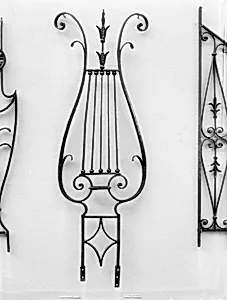
Medium
Wrought iron, lead
Dimensions
wt. confirmed: 40 1/4 × 13 1/2 in., 10.5 lb. (102.2 × 34.3 cm, 4.7 kg)
Classification
Metalwork-Iron
Culture
British
Department
European Sculpture and Decorative Arts
Museum
Metropolitan Museum of Art, New York, NY
Credit
Rogers Fund, 1931
Accession Number
31.92.15
Rights
Public Domain
Art Historical Context
This elegant wrought iron baluster, crafted by an unknown British artisan around 1780, the refined metalwork of late Georgian England. Balusters like this one were essential components of staircases, balconies, and railings in grand homes and public buildings, blending structural support with decorative flair. Standing at over 40 inches tall and weighing a sturdy 10.5 pounds, it reflects the period's emphasis on symmetry and classical proportions, influenced by the neoclassical revival sweeping British architecture. Forged from wrought iron—a labor-intensive medium heated and hammered by hand for exceptional strength and malleability—the baluster incorporates lead elements, likely for added stability or subtle weighting. This combination highlights the blacksmith's mastery, a craft honed over generations before industrialization diminished such artisanal techniques. Acquired through the Rogers Fund in 1931, it now graces The Metropolitan Museum of Art's Department of European Sculpture and Decorative Arts. As a snapshot of everyday luxury in 18th-century Britain, this piece invites us to appreciate the unsung heroes of decorative arts: skilled smiths whose work elevated ordinary architecture into enduring beauty.