
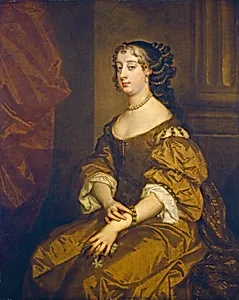
Barbara Villiers, Duchess of Cleveland
c. 1661-1665
Medium
oil on canvas
Dimensions
overall: 126.1 x 101.5 cm (49 5/8 x 39 15/16 in.) framed: 152.4 x 127.3 cm (60 x 50 1/8 in.)
Classification
Painting
Department
CAB
Museum
National Gallery of Art, Washington, D.C.
Credit
Timken Collection
Accession Number
1960.6.26
Rights
Public Domain
Art Historical Context
This striking portrait captures Barbara Villiers, Duchess of Cleveland, one of the most influential and glamorous figures at the court of King Charles II during the English Restoration. Painted around 1661–1665, the work originates chiefly from the studio of Sir Peter Lely, the leading court painter of the period. Villiers, renowned for her beauty and her role as the king’s favored mistress, embodies the era’s blend of political power and courtly allure. Lely’s workshop produced numerous such images, reflecting the high demand for portraits that celebrated the restored monarchy’s vitality and elegance. Executed in oil on canvas, the painting showcases the rich textures and luminous colors typical of Baroque portraiture. Lely’s style emphasized graceful poses, flowing drapery, and a soft, flattering light that highlighted the sitter’s status and charm. As a studio work, it illustrates the collaborative practices of 17th-century artists’ workshops, where the master oversaw compositions while assistants handled much of the execution to meet royal and aristocratic commissions. Today in the National Gallery of Art’s collection as part of the Timken Collection, the portrait offers visitors a vivid glimpse into Restoration society. It highlights how art served both personal commemoration and broader cultural narratives of beauty, power, and monarchy in 17th-century England.