
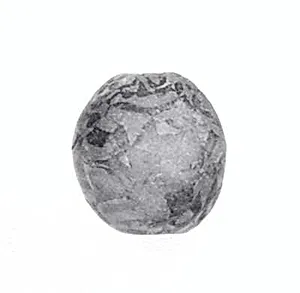
Bead
Unknown Artist
ca. 3rd–7th century CE
Medium
Glass
Dimensions
H. 2.3 cm x W. 2.1 cm x D. 1.2 cm
Classification
Glass-Ornaments
Culture & Period
Sasanian · Sasanian
Department
Ancient Near Eastern Art
Museum
Metropolitan Museum of Art, New York, NY
Credit
Rogers Fund, 1934
Accession Number
34.107.125
Rights
Public Domain
Art Historical Context
This unassuming yet exquisite glass bead, dating to the Sasanian period (ca. 3rd–7th century CE), hails from the ancient Persian Empire that stretched across modern-day Iran and beyond. Measuring just 2.3 cm high, 2.1 cm wide, and 1.2 cm deep, it exemplifies the everyday ornaments worn by people in this vibrant culture, which bridged the classical world and early Islam. Acquired through the Rogers Fund in 1934, it now graces the Metropolitan Museum of Art's Department of Ancient Near Eastern Art. Sasanian glassworking represented a pinnacle of technical skill in the ancient Near East, with artisans crafting beads through molding or trailing techniques that allowed for intricate shapes and vibrant colors. Though the exact hue and design of this bead remain unspecified, such objects were often translucent or opaque, imitating precious stones like lapis lazuli or carnelian to make luxury accessible. These beads adorned necklaces, bracelets, and amulets, symbolizing status, protection, or trade connections along the Silk Road. In a world of grand palaces and rock reliefs, this tiny artifact whispers of Sasanian ingenuity and daily life—reminding us how even small adornments carried profound cultural weight, linking wearers to a sophisticated empire renowned for its Zoroastrian artistry and enduring influence on Islamic glass traditions.