
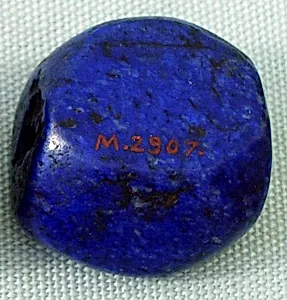
Bead
Unknown Artist
9th–19th century
Medium
Lapis lazuli
Classification
Jewelry
Department
Islamic Art
Museum
Metropolitan Museum of Art, New York, NY
Credit
Gift of Helen Miller Gould, 1910
Accession Number
10.130.2907
Rights
Public Domain
Art Historical Context
Nestled in the Metropolitan Museum of Art's Islamic collection, this unassuming lapis lazuli exemplifies the enduring allure of a material cherished across centuries. Dating from the 9th to 19th century and crafted by an unknown artist, bead—classified as jewelry—was generously gifted by Helen Miller Gould 1910. Its deep, vibrant blue hue, derived from the rare semi-precious stone sourced primarily from Afghanistan, made lapis lazuli a symbol luxury and spirituality in the Islamic world. apis lazuli held profound cultural significance, often symbolizing the heavens and divine wisdom. In jewelry form, such beads adorned necklaces, amulets, and prayer strings, blending everyday adornment with protective talismans. The broad timeframe reflects its consistent use from the Abbasid era through the Ottoman period, highlighting trade networks like the Silk Road that brought this "stone of heaven" to artisans across the Middle East and beyond. Though small, this bead invites us to ponder the artistry in simplicity—polished to perfection, it captures the technical skill of ancient lapidaries and the timeless value placed on natural beauty in Islamic craftsmanship. A quiet gem in the museum's vaults, it connects visitors to a vibrant heritage of innovation and reverence.