
Beauty of the Kanbun Era (Kanbun Bijin)
Unknown Artist
late 17th century
Medium
Hanging scroll; color on silk
Dimensions
Image: 25 3/4 × 11 1/2 in. (65.4 × 29.2 cm) Overall with mounting: 57 1/2 × 16 1/4 in. (146.1 × 41.3 cm) Overall with knobs: 57 1/2 × 18 1/4 in. (146.1 × 46.4 cm)
Classification
Paintings
Culture & Period
Japan · Edo period (1615–1868)
Department
Asian Art
Museum
Metropolitan Museum of Art, New York, NY
Credit
H. O. Havemeyer Collection, Bequest of Mrs. H. O. Havemeyer, 1929
Accession Number
29.100.447
Rights
Public Domain
Tags
Art Historical Context
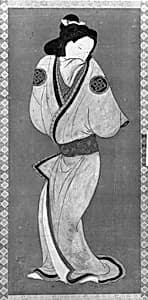
Step into the refined world of Edo-period Japan with *Beauty of the Kanbun Era (Kanbun Bijin)*, a captivating hanging scroll painted in vibrant colors on silk. Created an unknown artist in the 17th century, work measures about 25¾ × 11½ inches exemplifies the elegant bijin-ga tradition—portraits celebrating feminine beauty. Hanging scrolls like this were cherished in Japanese homes, unrolled for intimate viewing during tea gatherings or seasonal displays, blending artistry with cultural ritual. The Kanbun era (1661–1673), named after an imperial reign period, set ideals of beauty marked by delicate features, elaborate kimonos, and poised grace, which this painting evocatively captures. Produced during the prosperous Edo period (1615–1868), it reflects Japan's urban flourishing under the Tokugawa shogunate, where images of women symbolized harmony and refinement amid isolationist policies. The silk medium allowed for luminous hues and subtle ink washes, showcasing masterful techniques in layering color for lifelike skin tones and flowing fabrics. Now part of the Metropolitan Museum of Art's H. O. Havemeyer Collection (1929), this scroll offers a window into historical aesthetics, inviting visitors to ponder timeless notions of beauty in Japanese art.