
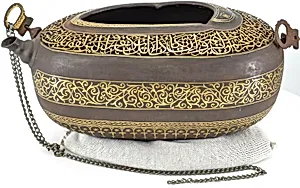
Beggar's Bowl (Kashkul)
Unknown Artist
late 19th–early 20th century
Medium
Steel; pierced, gold damascened
Dimensions
L: 10 in (25.4 cm) W: 6 in (15.24 cm) D: 4 1/2 in (11.43 cm)
Classification
Metal
Department
Islamic Art
Museum
Metropolitan Museum of Art, New York, NY
Credit
Gift of Jonathan Lipkin, 2018
Accession Number
2018.665.1
Rights
Public Domain
Art Historical Context
Nestled in the Islamic Art collection at the Metropolitan Museum of Art, *Beggar's Bowl (Kashkul)* from the late 19th to early 20th century the exquisite metalwork traditions of the Islamic world.kuls were essential accessories for Sufi dervishes—wandering ascetics who embraced poverty as a path to spiritual enlightenment. Crafted from steel, this bowl served a practical purpose: collecting alms during pilgrimages or devotional journeys. Its generous dimensions—10 inches long, 6 inches wide, and 4½ inches deep—made it ideal for carrying food or offerings, while symbolizing humility and detachment from material wealth. The artistry shines through sophisticated techniques: piercing creates delicate openwork patterns, allowing light to dance through intricate motifs, and gold damascening embeds fine gold wires into the steel surface for a luxurious contrast. This koftgari method, popular in Persian and Indian workshops, demanded immense skill, blending functionality with opulent decoration often featuring floral or geometric designs evocative of Islamic aesthetics. A generous gift from Jonathan Lipkin in 2018, this anonymous masterpiece invites visitors to ponder the intersection of spirituality and craftsmanship, reminding us how everyday objects in Islamic culture carried profound philosophical weight.