
Beleg van La Rochelle
1628 - 1631
Medium
engraving
Dimensions
164; 577
Rights
Public Domain
About this artwork
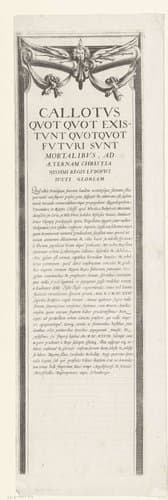
Zestiende deel (tekst, deel rechtsboven) van een prent van het beleg van het hugenotenbolwerk La Rochelle in de jaren 1627 en 1628, dat werd uitgevoerd in opdracht van de Franse koning door het Franse leger onder aanvoering van kardinaal Richelieu. Op dit blad een algemene toelichting op het onderwerp van de prent, in het Latijn.
Art Historical Context
### Beleg van La Rochelle into the turbulent world of 17th-century France with *Beleg van La Rochelle an anonymous engraving from 1628–1631 capturing a pivotal moment in the French of Religion. This artwork depicts the siege of La Rochelle, the staunch Huguenot (Protestant) stronghold blockaded from 1627 to 1628 by King Louis XIII's forces under the iron-fisted Cardinal Richel. The prolonged encirclement, which starved the city into submission, marked Richelieu's triumph over Protestant rebels and centralized royal power, reshaping France's religious and political landscape. Measuring 577 mm high by 164 mm wide, this sheet forms the sixteenth part—specifically the textual panel in the top right—of a larger multi-panel print series chronicling the siege. Rendered in intricate engraving, a technique prized for its precision and ability to produce detailed, reproducible images, it features a general explanation in Latin, underscoring the era's scholarly tone for educated audiences. Such prints were vital for disseminating news and royal propaganda across Europe, blending visual narrative with commentary. As a contemporary artifact, *Beleg van La Rochelle* offers a window into how art served history's turning points, immortalizing Richelieu's strategic mastery and the human cost of religious strife. A testament to engraving's role in public memory, it invites us to ponder the clash of faith and monarchy.
About the Artist
anonymous
In the vast tapestry of art history, "Anonymous" stands not as a singular individual but as a collective designation for countless unidentified creators whose works have endured across millennia. These artists, spanning prehistoric cave painters to medieval illuminators and folk craftsmen, produced the foundational layers of human visual culture. Prior to the Renaissance, when individual fame emer...