
4/6
1629 - 1631
Medium
etching
Dimensions
162; 598
Rights
Public Domain
About this artwork
plaatrand: hoogte 162 mm x breedte 598 mm
Art Historical Context
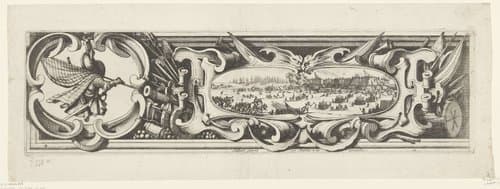
**Jacques Callot's "4/6" (16291631)** Jacques Callot, a pioneering French etcher of the Baroque era (1592–1635), created this panoramic etching as plate 4 of a presumed six-part series during the tumultuous years of the Thirty Years' War. for his unflinching of war's chaos, Callot drew from the conflicts ravaging Europe, particularly in his native Lorraine. Measuring just 162 mm high by 598 mm wide, the print's elongated format masterfully compresses vast scenes into intricate detail, inviting viewers to pore over crowds of soldiers, civilians, and dramatic action—a hallmark of Callot's ability to evoke both grandeur and horror. Callot's etching technique revolutionized printmaking, employing multiple acid bites on the copper plate to achieve subtle tones and textures rivaling paintings. This innovation allowed him to render hundreds of tiny figures with astonishing precision, blending narrative storytelling with social commentary. "4/6" likely captures a pivotal moment from military campaigns, underscoring the human cost of endless strife and influencing later artists like Goya. As a cultural artifact, this work reflects early modern Europe's shift toward realistic war portrayal, moving beyond heroic myths. Its survival as a fine etching offers museum visitors a window into 17th-century turmoil, reminding us of art's power to document history's darkest chapters.
About the Artist
Jacques Callot · 1592–1635
Jacques Callot (1592–1635) was a French printmaker and draftsman from the Duchy of Lorraine, widely regarded as one of the first great artists to practice the graphic arts exclusively. His more than 1,400 etchings chronicled the breadth of 17th-century life, from Medici court festivities to the brutal realities of warfare. Callot revolutionized etching through technical innovations including the é...