
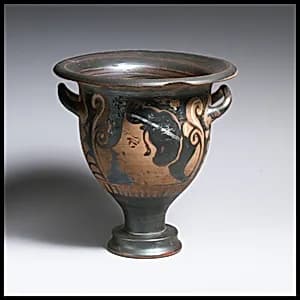
Bell-krater
ca. 360–330 BCE
Medium
Terracotta
Dimensions
Overall: 7 1/2 in. (19.1 cm) Diameter: 5 3/8 × 7 3/8 × 3 3/16 in. (13.7 × 18.7 × 8.1 cm)
Classification
Vases
Culture & Period
Greek, South Italian, Campanian · Late Classical
Department
Greek and Roman Art
Museum
Metropolitan Museum of Art, New York, NY
Credit
Rogers Fund, 1941
Accession Number
41.162.263
Rights
Public Domain
Tags
Art Historical Context
This elegant bell-krater, crafted in terracotta around 360–330 BCE, exemplifies the vibrant ceramic tradition of Greek South Italy. Produced in Campania by the Painter of Oxford 1945.73, the vessel reflects the Late Classical period’s refined red-figure technique, where figures emerge in the natural red clay against a glossy black background. Bell-kraters like this one served a practical role in ancient symposia, mixing wine with water for communal gatherings, yet their surfaces often carried narrative scenes that elevated everyday objects into storytelling mediums. The krater’s Campanian origin highlights the cultural exchange between mainland Greece and its western colonies, where local workshops adapted Athenian styles while developing distinctive regional flavors. The presence of female figures among its decoration suggests themes of domestic life, ritual, or mythology popular in the period, inviting viewers to consider women’s roles in both art and society. Acquired by the Metropolitan Museum through the Rogers Fund in 1941, this modest yet finely painted vessel offers a tangible connection to the artistic networks of the ancient Mediterranean.