
Bénitier (holy water font)
Unknown Artist
18th century
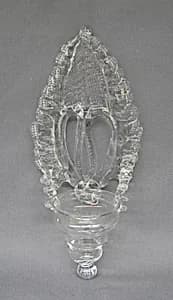
Medium
Glass
Dimensions
9 1/4 × 4 3/8 in. (23.5 × 11.1 cm)
Classification
Glass
Culture
French
Department
European Sculpture and Decorative Arts
Museum
Metropolitan Museum of Art, New York, NY
Credit
Gift of Henry G. Marquand, 1883
Accession Number
83.7.122
Rights
Public Domain
Tags
Art Historical Context
Nestled in the Metropolitan Museum of Art's European Sculpture and Decorative Arts collection, this delicate *Bénitier*—a French holy water font from the 18th centuryserves as a poignant reminder of personal piety in ancien régime France. Crafted by an unknown artist, it designed for the faithful to dip their fingers in blessed water upon entering a home or private chapel, warding off evil and invoking divine protection. Its modest dimensions of 9¼ × 4⅜ inches (23.5 × 11.1 cm) suggest was intended for domestic use rather than grand ecclesiastical settings, reflecting the era's blend of opulent craftsmanship and intimate religious devotion amid the Catholic Baroque traditions. Made of glass, a prized medium in 18th-century France for its clarity and versatility, this font exemplifies the technical prowess of European glassmakers. French artisans excelled in molding and possibly engraving such vessels, creating luminous objects that caught the light in candlelit interiors. Though details of its production remain elusive, its survival highlights the enduring appeal of decorative religious artifacts, gifted to the Met in 1883 by philanthropist Henry G. Marquand. Today, this unassuming yet elegant piece invites visitors to ponder the tactile rituals of faith, bridging the opulence of Versailles-era aesthetics with everyday spirituality. A testament to France's rich glassworking heritage, it whispers of a world where beauty sanctified the sacred.