
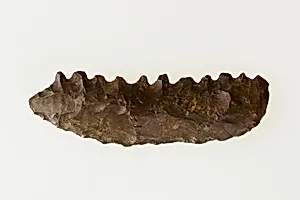
Bifacial Sickle Insert
Unknown Artist
ca. 6900–3100 B.C.
Medium
Flint
Dimensions
L. 7.9 × W. 2.3 × Th. 0.9 cm, Wt. 19.1g (3 1/8 × 7/8 × 3/8 in., 19.1g)
Classification
Tool, sickle, bifacial, denticulate
Period
Neolithic–Predynastic Period
Department
Egyptian Art
Museum
Metropolitan Museum of Art, New York, NY
Credit
Gift of Herbert E. Winlock, 1926
Accession Number
26.10.48
Rights
Public Domain
Art Historical Context
Step into the dawn of Egyptian civilization with this **Bifacial Sickle Insert**, a small yet mighty flint tool from the Neolithic–Predastic Period (ca.6900–3100 B.C.). Crafted from fine-grained flint, it measures just 7.9 cm long and weighs a mere 19.1 grams, designed to fit into the curved handle of a sickle for harvesting wild grasses or early crops. Its bifacial design—expertly flaked on both sides—reveals precision of ancient knappers, creating sharp, serrated edges ideal for slicing through tough plant stems. This artifact offers a window into Egypt's Neolithic transition, when communities along the Nile began experimenting with agriculture, shifting from hunter-gatherer life to settled farming. Sickle inserts like this one were essential for reaping emmer wheat and barley, fueling population growth and laying groundwork for the Predynastic cultures that birthed pharaonic Egypt. The glossy patina on the flint, honed by use and time, hints at heavy daily labor in a world without metal tools. A gift to the Metropolitan Museum of Art from Herbert E. Winlock in 1926, this unassuming insert embodies the ingenuity of anonymous artisans whose innovations sparked one of history's greatest civilizations. Handle it virtually and feel the pulse of prehistory!