
Birth of King of Rome
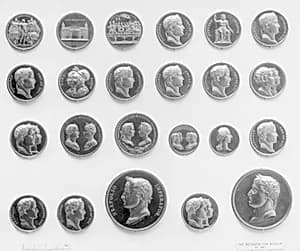
Medium
Gilt bronze, struck
Dimensions
Diameter: 1 5/8 in. (4.1 cm)
Classification
Medals and Plaquettes
Culture
French
Department
European Sculpture and Decorative Arts
Museum
Metropolitan Museum of Art, New York, NY
Credit
Gift of Hon. Levi P. Morton, 1885
Accession Number
85.2.23
Rights
Public Domain
Art Historical Context
In 1811, amid the height of Napoleon Bonaparte's imperial ambitions, France celebrated the birth of his son, Napoléon François Joseph Charles Bonaparte, on March 20. Dubbed the "King of Rome" heir to a envisioned new Roman Empire, the infant's arrival was marked by widespread festivities and official commemorations. This exquisite gilt bronze medal, struck by the Paris Mint, that triumphant moment, embodying the era's blend of propaganda and artistry under the Napoleonic regime. Crafted by master engraver Bertrand Andrieu, with oversight from Baron Dominique Vivant Denon—director of the French museums and a key cultural figure—the medal exemplifies neoclassical precision in miniature form. Measuring just 1 5/8 inches (4.1 cm) in diameter, its struck gilt bronze surface gleams with intricate details, likely portraying the newborn prince alongside imperial symbols of victory and lineage. Such medals were prized collectibles, blending sculpture's depth with coin-like reproducibility, and served as portable emblems of loyalty to the Emperor. Today, housed in The Metropolitan Museum of Art's European Sculpture and Decorative Arts department (gift of Hon. Levi P. Morton, 1885), this plaquette offers a tangible glimpse into Napoleonic pomp and the fragility of dynastic dreams—the young "King of Rome" would never rule, dying in exile at 21. A testament to artistry in service of power, it invites visitors to ponder empire's fleeting glory.
About the Artist
Bertrand Andrieu|baron Dominique Vivant Denon|Paris Mint · 1761–1822
French, Bordeaux 1761–1822 Paris