
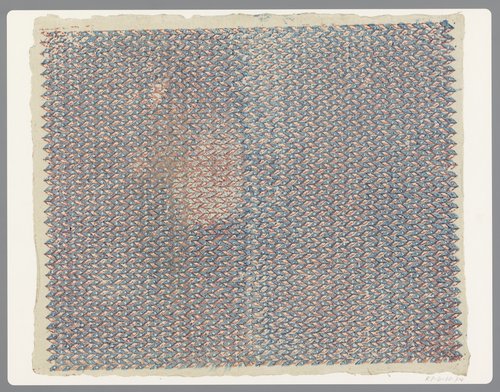
Blad met banenpatroon met afwisselend ruiten en stippen
1750 - 1900
Medium
block printing (relief printing process)
Dimensions
375; 450
Rights
Public Domain
About this artwork
height 375 mm x width 450 mm
Art Historical Context
This intriguing anonymous artwork, titled *Blad met banenroon met afwisselenduiten en stippen*Sheet with a Striped Pattern of Alternating Diamonds and Dots dates from between 1750 and 1900. Measuring 375 mm high by 450 mm wide, it showcases a repeating geometric design of bands featuring diamonds and dots—a hallmark of decorative textile or wallpaper samples from the 18th and 19th centuries. Such patterns were popular in European households, adorning fabrics for clothing, upholstery, or interiors, reflecting the era's growing fascination with affordable, mass-produced ornamentation. Crafted via block printing, a relief printing technique, the piece was created by carving intricate designs into wooden blocks, inking them, and pressing them onto fabric or paper. This labor-intensive method, widespread before mechanized printing dominated in the late 19th century, allowed artisans to produce vibrant, repeatable motifs efficiently. Its anonymity underscores the collaborative, often workshop-based nature of textile production during the Industrial Revolution, where skilled but unnamed craftspeople fueled a booming trade in patterned goods. Though modest in scale, this sheet offers a window into everyday artistry, highlighting how geometric patterns like these diamonds and dots brought rhythm and playfulness to domestic life, bridging folk traditions with emerging consumer culture. A delightful survivor of its time!
About the Artist
anonymous
In the vast tapestry of art history, "Anonymous" stands not as a singular individual but as a collective designation for countless unidentified creators whose works have endured across millennia. These artists, spanning prehistoric cave painters to medieval illuminators and folk craftsmen, produced the foundational layers of human visual culture. Prior to the Renaissance, when individual fame emer...