
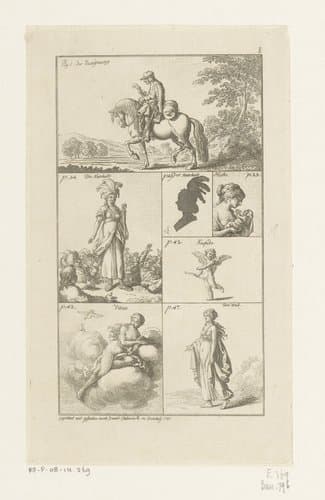
Blad uit De Lof der Zotheid
Medium
etching
Dimensions
98; 164
Rights
Public Domain
About this artwork
verzamelaarsmerk, verso, gestempeld: Lugt 2228
Art Historical Context
**Blad uit De Lof Zotheid (Sheet from The Praise of Folly)** Daniel Nikolaus Chodcki, 1780, etching, 164 × 98 mm* This delicate etching by Daniel Nikolaus Chodcki captures a moment from Erasmus of Rotterdam's iconic 1511 satire *The Praise of Folly* (*Moriae Encomium*), a witty critique of human folly, religion, and society that remains a cornerstone of Renaissance humanism. Chodowie, a prolific Prussian artist (1726–1801) and director of the Berlin Academy of Arts, was renowned for his intricate illustrations of literary classics, blending Rococo elegance with Enlightenment clarity. Produced in 1780, this small-scale print likely adorned an illustrated edition, inviting readers to visualize Folly's playful personification amid the era's intellectual fervor. Chodowiecki's etching technique—where acid etches fine lines into a copper plate—allowed for exquisite detail in expressive figures and textures, perfect for book art. At just 164 by 98 mm, it exemplifies the intimate format of 18th-century prints, making complex ideas accessible. The verso bears a collector's mark (Lugt 2228), signaling its prized status in historic auctions or libraries, underscoring its enduring appeal. This artwork bridges satire and visual storytelling, offering visitors a glimpse into how 18th-century artists revived Erasmus's timeless barbs on human nature.
About the Artist
Daniel Nikolaus Chodowiecki · 1726–1801
Daniel Nikolaus Chodowiecki (1726–1801) was a German painter and printmaker of Polish-Huguenot descent who became the most celebrated graphic artist in 18th-century Germany. Born in Danzig (now Gdańsk), he created approximately 2,000 etchings that serve as an invaluable visual record of German bourgeois life during the Enlightenment. Largely self-taught, Chodowiecki moved to Berlin in 1743 and ach...