
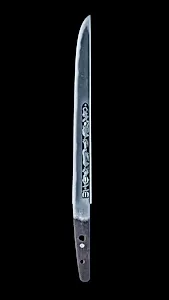
Blade and Mounting for a Dagger (Tantō)
Unknown Artist
blade, 16th century; mounting, early–mid 19th century
Medium
Steel, wood,ray skin (samé), paper, laquer, copper-gold alloy (shakudō), silver
Dimensions
L. 22 3/8 in. (56.8 cm); L. of blade 16 in. (40.6 cm); L. of cutting edge 10 11/16 in. (27.1 cm)
Classification
Daggers
Culture
Japanese
Department
Arms and Armor
Museum
Metropolitan Museum of Art, New York, NY
Credit
Gift of Brayton Ives and W. T. Walters, 1891
Accession Number
91.2.83
Rights
Public Domain
Art Historical Context
This exquisite Tantō dagger, featuring a 16th-century steel blade and early-to-mid 19th-century mounting, exemplifies the masterful craftsmanship of Japanese arms and armor. The blade, measuring 16 inches long with a 10 11/16-inch cutting edge, hails from a period of intense samurai warfare during Japan's Sengoku era, when such daggers served as vital close-combat weapons or tools for ritual seppuku. Its total length of 22 3/8 inches made it concealable yet lethal, prized by warriors for both utility and status. The mounting showcases Edo-period artistry with traditional materials: ray skin (samé) for a secure grip, lacquer for durability and shine, wood for the scabbard, and shakudō—a copper-gold alloy—along with silver for ornate fittings. These elements highlight the fusion of function and aesthetics in Japanese swordsmithing, where blades were forged through meticulous folding techniques for razor sharpness and resilience, while fittings often bore intricate motifs symbolizing nature or mythology. A gift to the Metropolitan Museum of Art from collectors Brayton Ives and W.T. Walters in 1891, this Tantō invites visitors to appreciate how Japanese artisans transformed weapons into wearable art, reflecting the samurai's blend of martial prowess and refined elegance.